Stage Fright Hitting Hard? Do 5 Minutes of Breath Work Before You Go On
Andy Nadal
Author
Your name gets called, and the room suddenly feels too bright. Your mouth goes dry. Your heart starts thumping like it's trying to warn you. You tell yourself, ...
Your name gets called, and the room suddenly feels too bright. Your mouth goes dry. Your heart starts thumping like it's trying to warn you. You tell yourself, "I'm fine," but your body doesn't believe you.
That's stage fright, and it's not a character flaw. It's a body alarm. The good news is that alarms can be turned down.
In this post, you'll learn a simple 5-minute breath work routine you can do in a hallway, backstage, or even in your seat. It's built for real life, not perfect calm. It's also the kind of short, guided approach Pausa was created for, after real panic attacks pushed its founders to find something simple that works without long meditations.
Why stage fright hits so hard (and why breathing helps fast)

Backstage nerves are real, a few minutes of steady breathing can help your body settle (created with AI).
Stage fright is your nervous system doing its job a little too well. Your brain senses "risk" (even if the risk is just being judged), then flips on fight-or-flight. As a result, your pulse climbs, your chest tightens, and your mind starts scanning for what could go wrong.
Breathing matters here because it's one of the fastest ways to send your body a new signal. Slow, steady breaths, especially with a longer exhale, nudge the system toward "safe enough." In simple terms, your body stops acting like it's being chased.
Breath work won't erase nerves. It can, however, stop the spiral. Instead of panic energy, you get usable energy. The kind that keeps you sharp.
If your breath is fast and shallow, your body reads "danger." If your breath is slow and steady, your body reads "I can handle this."
The signs your body is in "alarm mode"
Most people think stage fright is "in the head." It's also in the throat, chest, and hands.
You might notice:
- A tight chest, like your lungs can't fill
- A shaky voice, or your voice going thin
- Cold hands, sweating, or tingling fingers
- A fluttery stomach or sudden bathroom urgency
- Racing thoughts, blanking, or feeling unreal
Breathing changes, too. Many people start taking quick sips of air. Others hold their breath without noticing, especially right before they speak. That breath-holding can make dizziness and panic feel worse.
If this is you, you're not broken. Performers, students, founders, and even experienced speakers feel it.
What changes after 5 minutes of steady breathing
Five minutes can be enough to change the physical "noise." Your pulse often slows. Your shoulders drop. Your throat feels less clenched. The words come back online.
Structured breathing is also getting real research attention. For example, this paper on brief structured respiration and reduced physiological arousal describes how short breathing practices can improve mood and lower stress signals in the body.
In practical terms, people often notice:
- A steadier voice because the exhale stops trembling
- Less dizziness because breathing becomes more efficient
- Clearer timing because your brain isn't sprinting
- Better focus on the next line, not the whole performance
Techniques like diaphragmatic breathing, box breathing, and resonant breathing are popular for performance anxiety for one simple reason: they slow you down without asking you to "think positive."

Photo by Cup of Couple
Do this 5-minute breath work routine right before you go on
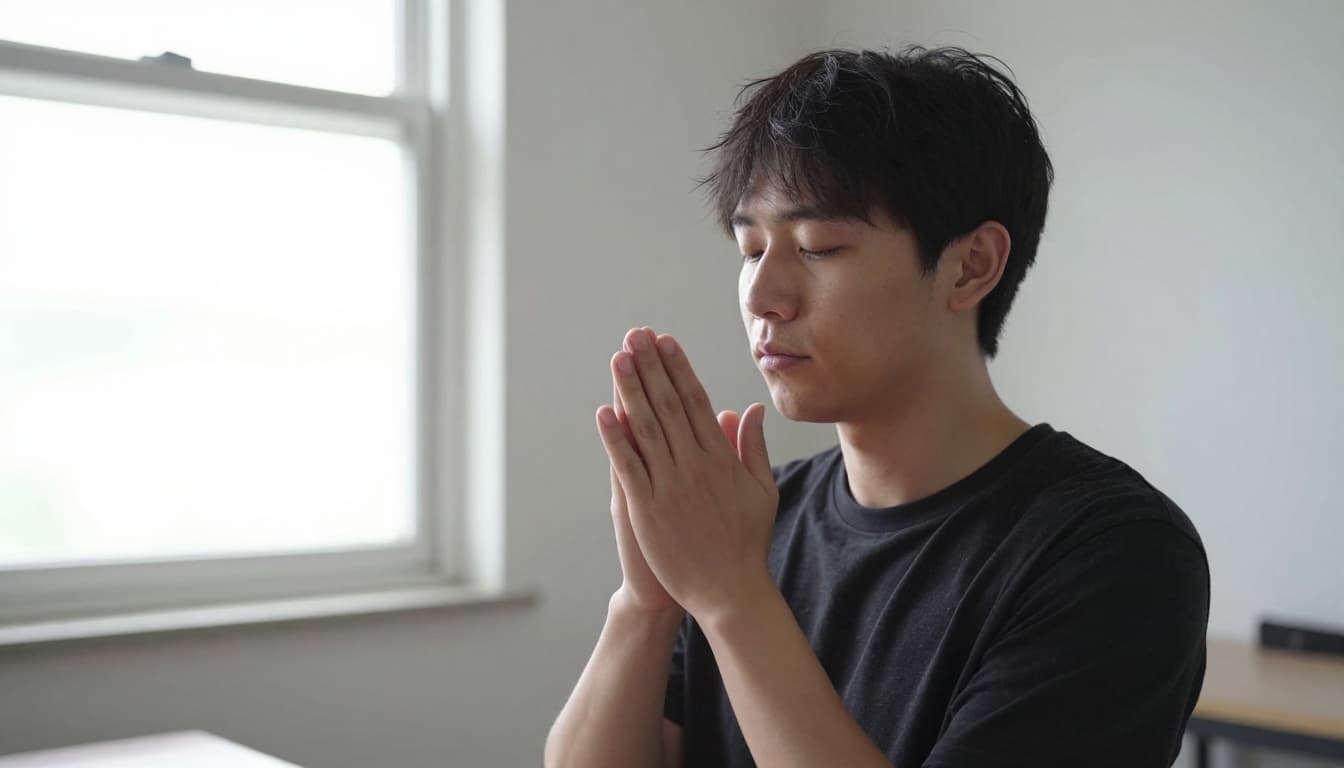
Counting your breath gives your mind one simple job, and that helps you feel more in control (created with AI).
This routine totals five minutes. It's quiet, simple, and built for tight spaces.
A quick safety note: if you feel lightheaded, stop counting and return to normal breathing. Don't strain. Don't force long holds. Calm beats "perfect."
Minute 0 to 1, reset your posture and exhale first
Plant your feet. Feel the floor push back.
Then loosen the places that steal breath:
- Drop your shoulders a half-inch.
- Unclench your jaw.
- Let your tongue rest, not press.
Now start with an exhale. Think of it like letting air out of a balloon.
Do this for 60 seconds:
- Inhale through your nose for 3 to 4 seconds.
- Exhale through your mouth for 5 to 6 seconds.
Keep the exhale smooth. A longer exhale is a quiet message to your body: "Stand down."
Minute 1 to 4, choose one pattern that matches your moment
Pick one option. Don't stack techniques when you're already keyed up.
If you want a simple guide in your pocket, Pausa's short guided breathing sessions are designed for stress and anxiety, especially for people who don't want complicated meditation. It's available on iOS and Android, so you can press play in a hallway and let the pacing carry you.
Option A: Box breathing (for control and focus)
Inhale 4, hold 4, exhale 4, hold 4. Repeat.
If counting slips, use your fingers or a subtle toe tap.
Option B: Resonant breathing (for steady calm)
Inhale 6 through your nose, exhale 6 through your nose. Repeat.
Aim for smooth, even breaths, like waves hitting the shore.
Actors and voice coaches often come back to these basics because breath control supports voice control. If you want a performer-focused perspective, see breath control exercises for actors.
One more thing: practice this when you're calm. Then, under pressure, your body recognizes the pattern and settles faster.
Minute 4 to 5, lock in a steady voice with "small exhales"
This last minute connects breathing to the first thing you have to do: speak, sing, or move.
Take a soft inhale through your nose. Then do a slow exhale as you silently mouth your first line. No sound needed. Just shape the words.
If your throat feels tight, try a gentle hum on the exhale. Keep it low and easy, like warming your voice without waking anyone up.
Add a tiny smile, even if it feels fake. The face and throat are roommates. When one relaxes, the other often follows.
What to do in the last 30 seconds, so you do not spiral on stage
The final seconds before you step out can feel like standing at the top of a drop. Your mind wants to time travel into every mistake you could make. Bring it back to one job: the next moment.
Use a "next small step" mindset, not a perfect performance mindset
Pick a short script and repeat it once, quietly: "All I have to do is start."
Then shrink the target. Not the whole talk. Not the whole song. Just the first 10 seconds.
Take one slow exhale before you step out. That exhale is your anchor. Some nerves will still be there, and that's okay. A little adrenaline can sharpen timing and presence, as long as it doesn't drive the car.
If your stage fright shows up in other high-pressure moments too, this guide on stress management strategies for job interviews can help you build a simple "in-the-moment" plan you can reuse anywhere.
If panic spikes mid-performance, do this without anyone noticing
You don't need a dramatic reset. You need a stealth one.
When you get a natural pause (a slide change, a laugh, a breath between lines), do this:
- Exhale longer than you inhale, just once.
- Drop your shoulders on the exhale, like a coat sliding off.
- Press your fingertips into a podium, your leg, or your pocket seam to feel grounded.
Add a silent cue word on the exhale, like "steady" or "here." Keep it simple so it doesn't compete with your words.
If panic attacks are frequent or intense, consider talking with a mental health professional. Breath work helps, but you shouldn't have to white-knuckle this alone.
Conclusion
Stage fright is common because your body thinks it's protecting you. Still, you can teach it a new signal in five minutes. Start with a long exhale, choose one steady pattern, then connect your breath to your first line.
Practice once a day when nothing's on the line. Then, when the spotlight hits, your body already knows the way back.
Breathe, pause, continue.